
Ninth night of the US-Iran war: third US soldier dead, tanker ablaze in HormuzUkraine war: more than 400 drones on the Moscow region, Russia shells KyivPutin receives North Korea's foreign minister and thanks her for wartime supportAfter Spahn's resignation: conservative bloc seeks parliamentary leader, Merz mulls cabinet reshuffleAndy Burnham becomes British prime ministerHungary: Magyar wants chess legend Judit Polgar as presidentNetanyahu attacks New York mayor Mamdani after arrest threatThousands of Israelis march to the Gaza border and demand new settlementsTaiwan reports more Chinese ships, concern over Pacific supply routesOil above 90 dollars: Iran war weighs on currencies and stock marketsStudy: electric cars significantly cheaper since 2020, combustion engines slightly pricierEarnings in Germany rose 5.1 percent in 2025Europe's rearmament: raw-material dependence and dispute over the fighter-jet legacyChina's luxury tax and price pressure hurt German carmakersChina's AI offensive: IPOs, robots and maxed-out data centersAI skepticism on the markets: investors seek new favorites, chip worries growNinth night of the US-Iran war: third US soldier dead, tanker ablaze in HormuzUkraine war: more than 400 drones on the Moscow region, Russia shells KyivPutin receives North Korea's foreign minister and thanks her for wartime supportAfter Spahn's resignation: conservative bloc seeks parliamentary leader, Merz mulls cabinet reshuffleAndy Burnham becomes British prime ministerHungary: Magyar wants chess legend Judit Polgar as presidentNetanyahu attacks New York mayor Mamdani after arrest threatThousands of Israelis march to the Gaza border and demand new settlementsTaiwan reports more Chinese ships, concern over Pacific supply routesOil above 90 dollars: Iran war weighs on currencies and stock marketsStudy: electric cars significantly cheaper since 2020, combustion engines slightly pricierEarnings in Germany rose 5.1 percent in 2025Europe's rearmament: raw-material dependence and dispute over the fighter-jet legacyChina's luxury tax and price pressure hurt German carmakersChina's AI offensive: IPOs, robots and maxed-out data centersAI skepticism on the markets: investors seek new favorites, chip worries grow
Bota
← All topics

Narrative thread · 9 events

Chip export controls

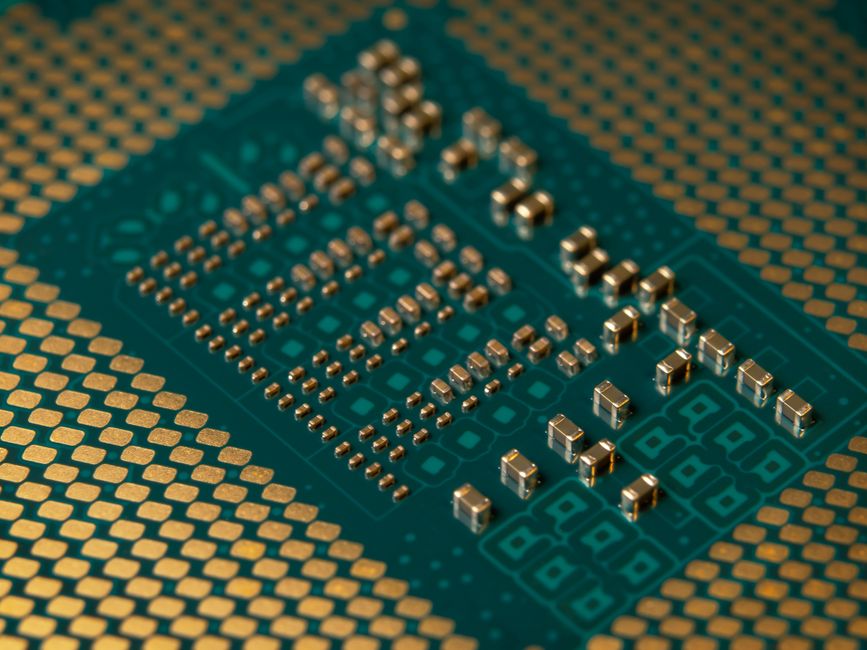
Symbolic image

Die USA verhängten im Oktober 2022 unter Präsident Biden weitreichende Exportkontrollen für fortschrittliche Halbleiter und Chipfertigungsanlagen gegen China, um Pekings Zugang zu Spitzentechnologie für Militär und künstliche Intelligenz zu begrenzen. Die Trump-Regierung verschärfte den Kurs im April 2025 zunächst mit einer Lizenzpflicht für Nvidias H20-Chip, schwenkte aber im Juli 2025 um und erlaubte dessen Wiederverkauf nach China. Im Dezember 2025 genehmigte Trump zusätzlich den Export des deutlich leistungsfähigeren H200-Chips, den das US-Handelsministerium seit Januar 2026 im Einzelfall an rund zehn chinesische Großkonzerne wie Alibaba, Tencent, ByteDance und JD.com lizenziert, gedeckelt auf 75.000 Einheiten pro Kunde und mit der Auflage, dass mindestens die Hälfte der Produktion für den US-Markt reserviert bleibt. Mitte Juli 2026 bestätigte das Handelsministerium, dass bislang nur eine verschwindend geringe Menge an H200-Chips tatsächlich nach China verschifft wurde, während die Lieferungen zugleich mit einem Einfuhrzoll von 25 Prozent belegt sind.

BloombergSouth China Morning PostCRN Asia

Timeline in detail

Monday, 20 July 2026Technology

AI skepticism on the markets: investors seek new favorites, chip worries grow

Skepticism toward the AI boom is growing on the stock markets: according to the Wall Street Journal, retail investors are turning away from the 'Magnificent Seven' and betting on new AI names. In China, investors unwound their leveraged bets faster than at any time since 2016, and in the memory-chip market fear of a new boom-and-bust cycle is spreading.

Sentiment on the stock markets toward the AI boom is turning more cautious: the conservative Wall Street Journal describes how retail investors are shunning the big tech corporations (the 'Magnificent Seven') and turning to new AI favorites as well as lean, 'AI-native' firms with little staff. Bloomberg reports that Chinese investors have wound down leveraged positions faster than at any time since the crash of 2015/2016, out of fear that the AI-driven rally is overstretched; this triggered a worldwide sell-off. The Financial Times warns that the massive investments in memory chips could set off a new boom-and-bust cycle in the already cyclical sector. The camps agree that AI demand is fundamentally robust but disagree over the valuations: optimists see a healthy consolidation, pessimists a looming bubble. Whether it stops at individual corrections or a broad crash follows is open. Investors are anxiously awaiting the upcoming quarterly results of the big chip and tech corporations.

Wall Street JournalBloombergFinancial Times

Sunday, 19 July 2026TechnologySemiconductor stocks swing: Apple overtakes Nvidia amid AI scepticism

Semiconductor stocks swing: Apple overtakes Nvidia amid AI scepticism

After a sell-off in semiconductor stocks, Apple briefly displaced AI giant Nvidia on Friday from its throne as the world's most valuable company. Chip stocks swing almost five times as much as the overall market, according to the FT. Growing doubts about the AI boom are fuelling the nervousness.

A sell-off in semiconductor stocks temporarily cost Nvidia the title of the world's most valuable listed company, which Apple reclaimed according to Turkey's Daily Sabah. The Financial Times describes the extreme volatility of the sector: chip stocks are now almost five times as volatile as the broad market. Behind this lie growing doubts about whether the enormous investments in artificial intelligence will bring the hoped-for returns. The market-liberal FT stresses the risk of overheating, while the Daily Sabah frames the change at the top of the stock market as a symbol of AI nervousness. The sources agree on the high volatility; what remains disputed is whether this is a healthy correction or the harbinger of a broader slump.

Financial TimesDaily Sabah

Forecast · Assessment
  • Most likely55%

    Chip stocks remain highly volatile with occasional corrections, without a broad crash, while AI demand stays fundamentally robust.

  • Worst case25%

    A broad repricing of the AI boom triggers a sustained sell-off and hits chip stocks and export-dependent economies.

  • Best case20%

    Solid quarterly figures confirm AI demand, calm the markets and let prices recover quickly.

Sunday, 19 July 2026TechnologyRevelation: CIA agent and the Emirates' AI rise

Revelation: CIA agent and the Emirates' AI rise

The Wall Street Journal describes how a CIA agent spied on the United Arab Emirates while also playing a role in the Gulf state's AI rise. The report sheds light on the close interweaving of intelligence services, chips and the Gulf's AI strategy. The evidence rests on a single piece of reporting.

In an investigative piece, the Wall Street Journal recounts the story of a CIA agent who spied on the United Arab Emirates while at the same time contributing to their rise as an AI hub. The report links espionage, access to advanced chips and the Emirates' multibillion-dollar AI strategy, which positions them as a global centre for computing power. It fits into the larger context of the recent easing of American chip-export rules for the Gulf states, which made it easier for the Emirates to buy advanced AI chips. The evidence here is expressly thin: the account rests on a single, conservative, market-liberal US source, with no independent counter-perspective or statement from Abu Dhabi available. The case nonetheless shows how closely technological ambition, geopolitical interests and intelligence work mesh in the race for AI.

Wall Street JournalWall Street Journal (Teil 2)

Forecast · Assessment
  • Most likely55%

    The Emirates keep driving their rise as an AI hub with US chips and capital, accompanied by debates over security and espionage risks.

  • Worst case20%

    Revelations about espionage and technology transfer strain the relationship between Washington and Abu Dhabi and the chip cooperation.

  • Best case25%

    The Gulf states establish themselves as reliable partners in Western AI infrastructure and diversify the global computing market.

Saturday, 18 July 2026EconomySemiconductor stocks slide into a bear market in a worldwide tech sell-off

Semiconductor stocks slide into a bear market in a worldwide tech sell-off

A broad sell-off has gripped technology stocks around the globe: US semiconductor shares slid into a technical bear market, and Taiwan's benchmark TAIEX index shed nearly 3,000 points. Netflix also weighed on sentiment after a growth warning. Investors increasingly doubt the high valuations of the AI boom.

China's Xinhua reports that US markets fell and semiconductors slid into a technical bear market, while The Wall Street Journal additionally points to the plunge in Netflix shares after a growth warning. In Asia, Taiwan's benchmark TAIEX index shed nearly 3,000 points amid the tech sell-off, according to the Taipei Times. The sell-off fuels doubts about whether the high valuations of the AI boom are sustainable, after chip stocks had previously risen sharply. At the same time, the Taipei Times points to the geopolitical dimension: Taiwan wants to keep its most advanced TSMC technology at home despite US pressure. The shift in market sentiment thus meets the ongoing dispute over control of chip manufacturing. Whether this is a healthy correction or the start of a broader repricing is contested.

Wall Street JournalXinhuaTaipei Times

Forecast · Assessment
  • Most likely55%

    High volatility persists, with individual corrections but no broad crash, while AI demand fundamentally sustains the sector.

  • Worst case25%

    A broad repricing of the AI boom triggers a sustained sell-off and hits supplier countries such as Taiwan and South Korea.

  • Best case20%

    Solid quarterly results calm the markets, and prices recover quickly.

Thursday, 16 July 2026TechnologyTSMC heads for record profit thanks to AI boom

TSMC heads for record profit thanks to AI boom

The world's largest contract chipmaker, TSMC, expects a record profit for the second quarter, driven by booming demand for AI chips. Revenue rose sharply year over year. It would be the fifth record quarter in a row.

Taiwanese contract chipmaker TSMC is likely to have posted a record profit in the second quarter, Reuters reported ahead of the earnings release; the driver is the continued strong global demand for artificial intelligence infrastructure. Revenue climbed sharply year over year to a peak, and analysts expected a strong jump in net profit, the fifth record quarter in a row. Advanced manufacturing processes in the few-nanometer range as well as modern packaging technology for AI chips are seen as the demand drivers. The report comes from an independent business source and is largely numbers-driven, so no pronounced partisan divides emerge here; what is contested is rather the fundamental question of whether the AI boom is sustainable. For the chip industry and the AI-driven stock markets, TSMC is regarded as a bellwether. The full quarterly figures were expected on July 16.

ReutersThe Star

Forecast · Assessment
  • Most likely60%

    AI demand keeps carrying TSMC's profits, accompanied by high volatility in chip stocks and louder overheating warnings.

  • Worst case20%

    A repricing of the AI boom triggers a broad sell-off in chip stocks and hits the supplier countries.

  • Best case20%

    Demand translates into sustainable profits and productivity gains beyond the chip industry.

Wednesday, 15 July 2026TechnologyAI boom drives chip and memory stocks: SK Hynix jumps 13 percent

AI boom drives chip and memory stocks: SK Hynix jumps 13 percent

The persistent AI demand is lifting the semiconductor sector: SK Hynix shares jumped 13 percent, Japan's Kioxia is benefiting from memory demand, and Singapore's chip exports have nearly doubled. The AI cloud provider CoreWeave is looking for ways to hedge the price risk on memory chips.

The sources paint a uniform picture of an AI-driven upswing but illuminate different fronts. Reuters reports SK Hynix's 13 percent jump as U.S. tech stocks move higher again, a marked recovery after the previous week's sell-off. AFP reports how AI demand is igniting a previously "ignored sector" at Japan's Kioxia, and the Handelsblatt shows, using the example of Singapore, whose chip exports nearly doubled, how entire economies are cashing in on the boom. Reuters at the same time documents the flip side: the AI cloud provider CoreWeave is examining Wall Street instruments to hedge against fluctuating memory-chip prices, a hint of growing scarcity and price risk. The strong, broadly based AI demand is a fact; the background warning of overheating and concentration in a few stocks persists but recedes on this day of recovery.

ReutersAFPHandelsblatt

Forecast · Assessment
  • Most likely60%

    AI demand continues to carry chip and memory stocks, accompanied by high volatility and ever-louder overheating warnings.

  • Worst case20%

    A repricing of the few dominant AI stocks triggers a broad sell-off that drags supplier countries down with it.

  • Best case20%

    Demand translates into sustainable profits and productivity gains beyond the chip sector.

Tuesday, 14 July 2026TechnologyUS approves Nvidia H200 chip deliveries to China

US approves Nvidia H200 chip deliveries to China

The US government has granted licenses for the sale of Nvidia's H200 AI chips to Chinese companies, including ZTE. A US official confirmed that deliveries have already begun.

Both raw reports come from the independent agency Reuters and cover two facets of the same development. In an exclusive report, Reuters shows on the basis of documents that Chinese companies, including the telecom group ZTE, have received licenses to purchase Nvidia's H200 chips. A second report quotes a US official confirming that deliveries of the H200 chips to China have already begun. Since both sources are the same news agency, a contrasting perspective is missing: neither a Chinese framing as a sign of détente nor a US national security critique of the loosening of export controls is present. The granted approval and the started shipment are treated as fact; the strategic assessment of whether this represents an opening or a security risk remains open in the raw reports.

Reuters (Exklusiv)Reuters

Forecast · Assessment
  • Most likely55%

    Deliveries continue in a controlled manner and serve as bargaining leverage in the trade conflict.

  • Worst case20%

    The chips strengthen China's military and AI capacities and provoke sharp criticism in the US Congress.

  • Best case25%

    The controlled export eases trade relations without security policy damage.

Monday, 13 July 2026TechnologyAI boom drives chip demand: Son predicts five-trillion-dollar requirement

AI boom drives chip demand: Son predicts five-trillion-dollar requirement

SoftBank founder Masayoshi Son declared that artificial intelligence will require five trillion dollars annually by 2040, and dismissed warnings of a bubble. TSMC is heading for its fifth record quarter in a row thanks to AI demand, and South Korea raised its growth forecast because of Samsung and SK Hynix. At the same time, a black market for banned AI chips bound for China is growing.

Reuters and the Financial Times report that Son mocked critics of AI technology ("spitting upward") and puts the AI capital requirement from 2040 at five trillion dollars a year; he sees nuclear fusion as the key to the AI future. TSMC is likely, according to Reuters, to deliver its fifth record quarter in a row, and South Korea, according to the Handelsblatt, raised its growth forecast markedly, supported by the memory chip giants Samsung and SK Hynix. At the same time, an FT feature examines the flourishing black market through which advanced AI semiconductors reach China despite US export controls. The sources are predominantly economically liberal and share the growth euphoria; cautionary voices on the danger of a bubble appear almost only as the target of Son's mockery, which skews the picture optimistically.

ReutersFinancial TimesReutersHandelsblatt

Forecast · Assessment
  • Most likely55%

    Chip demand and the record profits of the manufacturers persist, while warnings of overheating grow louder in the background.

  • Worst case20%

    Investment outruns real demand, an AI valuation bubble bursts and drags down chip stocks and supplier countries with it.

  • Best case25%

    The AI boom translates into broad productivity gains and carries sustainable growth in Asia and beyond.

Saturday, 4 July 2026TechnologyUS Eases AI Chip Exports for the UAE

US Eases AI Chip Exports for the UAE

In a notice published on Friday, the US administration stated that the United Arab Emirates will in future find it easier to buy advanced technologies, including AI semiconductors. The Commerce Department cited measures by the UAE to protect sensitive US technology. At the same time, data show that China’s chip exports nearly doubled in the first half of the year.

Around 4 July 2026, it emerged that the Trump administration is easing export restrictions for the United Arab Emirates, thereby clearing the way for the purchase of advanced technologies, including the semiconductors needed for AI. According to a notice published on Friday by the US Commerce Department, the UAE now qualifies for eased treatment under US export control laws, justified by steps taken by the Emirates to protect sensitive American technology. In parallel, foreign trade data show that China’s chip exports nearly doubled in the first half of 2026: 179.44 billion integrated circuits worth around 177 billion dollars, an increase of more than 96 percent over the previous year. The move shows how the United States is using access to AI chips as a geopolitical instrument. The information relies on reports by Bloomberg and the South China Morning Post; the concrete design of the easing was not yet public in all its details at the time of reporting.

BloombergSouth China Morning Post

Forecast · Assessment
  • Most likely55%

    Clear protective conditions for the UAE become a model that enables legitimate AI trade and effectively curbs abuse.

  • Most likely20%

    Clear protective conditions for the UAE become a model that enables legitimate AI trade and effectively curbs abuse.

  • Most likely25%

    Clear protective conditions for the UAE become a model that enables legitimate AI trade and effectively curbs abuse.