Ninth night of the US-Iran war: third US soldier dead, tanker ablaze in HormuzUkraine war: more than 400 drones on the Moscow region, Russia shells KyivPutin receives North Korea's foreign minister and thanks her for wartime supportAfter Spahn's resignation: conservative bloc seeks parliamentary leader, Merz mulls cabinet reshuffleAndy Burnham becomes British prime ministerHungary: Magyar wants chess legend Judit Polgar as presidentNetanyahu attacks New York mayor Mamdani after arrest threatThousands of Israelis march to the Gaza border and demand new settlementsTaiwan reports more Chinese ships, concern over Pacific supply routesOil above 90 dollars: Iran war weighs on currencies and stock marketsStudy: electric cars significantly cheaper since 2020, combustion engines slightly pricierEarnings in Germany rose 5.1 percent in 2025Europe's rearmament: raw-material dependence and dispute over the fighter-jet legacyChina's luxury tax and price pressure hurt German carmakersChina's AI offensive: IPOs, robots and maxed-out data centersAI skepticism on the markets: investors seek new favorites, chip worries growNinth night of the US-Iran war: third US soldier dead, tanker ablaze in HormuzUkraine war: more than 400 drones on the Moscow region, Russia shells KyivPutin receives North Korea's foreign minister and thanks her for wartime supportAfter Spahn's resignation: conservative bloc seeks parliamentary leader, Merz mulls cabinet reshuffleAndy Burnham becomes British prime ministerHungary: Magyar wants chess legend Judit Polgar as presidentNetanyahu attacks New York mayor Mamdani after arrest threatThousands of Israelis march to the Gaza border and demand new settlementsTaiwan reports more Chinese ships, concern over Pacific supply routesOil above 90 dollars: Iran war weighs on currencies and stock marketsStudy: electric cars significantly cheaper since 2020, combustion engines slightly pricierEarnings in Germany rose 5.1 percent in 2025Europe's rearmament: raw-material dependence and dispute over the fighter-jet legacyChina's luxury tax and price pressure hurt German carmakersChina's AI offensive: IPOs, robots and maxed-out data centersAI skepticism on the markets: investors seek new favorites, chip worries grow

Bota
← All topics

Narrative thread · 3 events · Forecast hits 1/2

Canada's wildfires

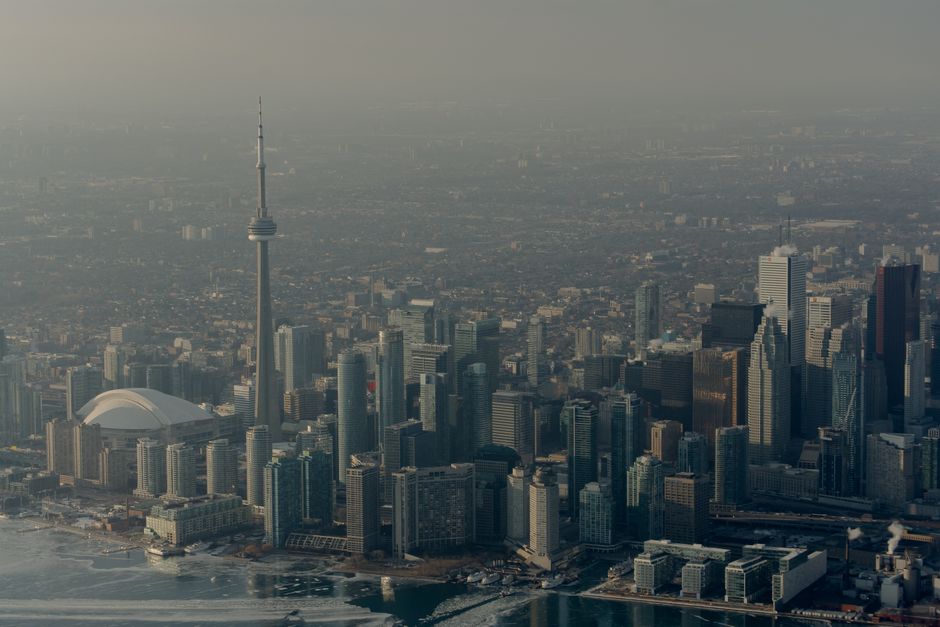
Symbolic image

Kanada erlebte 2023 die verheerendste Waldbrandsaison seiner Geschichte, bei der rund 16,5 Millionen Hektar Land verbrannten, mehr als doppelt so viel wie beim bisherigen Rekord und fast sieben Mal so viel wie im langjährigen Mittel. Der Rauch trieb im Juni 2023 über Ontario und die USA und ließ die Luftqualität in Ottawa, Toronto sowie weiten Teilen des südlichen Ontario auf die höchste Gefahrenstufe des kanadischen Luftqualitätsindex steigen, zeitweise galt die Luft dort als die schlechteste weltweit. Als Klima-Kontext gilt, dass Kanada in jenem Jahr die wärmste Mai-bis-Juli-Periode seit über 80 Jahren verzeichnete und der Klimawandel die Wahrscheinlichkeit extremer Feuerwetterlagen in Quebec mehr als verdoppelte. Auch 2025 folgte mit fast 4.000 Bränden die zweitschlimmste je erfasste Saison, angetrieben vor allem durch Feuer in Manitoba und Saskatchewan. Der wiederkehrende Rauch belastet seither regelmäßig nordamerikanische Städte, wie erneut im Juli 2026 mit Luftqualitätswarnungen im Nordosten und Mittleren Westen der USA.

WikipediaNatural Resources CanadaCNN

Timeline in detail

Sunday, 19 July 2026Geopolitics

Canadian wildfires shroud US cities in smoke, Trump threatens tariffs

Smoke from hundreds of Canadian wildfires settled over a dozen US states; millions of Americans were told to stay indoors. President Trump threatened Canada with higher tariffs to offset the economic cost of the smoke. In Ontario alone almost 200 fires are burning.

Soot from nearly a thousand active fires in Canada drifted into the US and clouded the air on Friday over the Great Lakes, the Northeast and the Mid-Atlantic; authorities warned millions of people of harmful air. Politico and Turkey's Daily Sabah report that President Trump threatened to raise tariffs on Canada to offset the cost of the smoke. The New York Times frames the almost 200 fires in Ontario alone as part of an increasingly frequent run of disasters. Le Monde looks at the long-term destruction of the boreal forests and quotes experts saying that the recurring mega-fires are permanently altering the forest. Across the camps, the smoke is regarded as a cross-border problem; what is disputed is Trump's attempt to turn it into a trade-policy lever against Ottawa.

PoliticoNew York TimesLe MondeDaily Sabah

Saturday, 18 July 2026GeopoliticsTrump threatens Canada with tariffs over wildfire smoke

Trump threatens Canada with tariffs over wildfire smoke

President Trump has threatened Canada with tariffs because smoke from wildfires there is polluting large parts of the US Northeast. He spoke of “willful negligence,” and Republicans even floated sanctions. Canadian Prime Minister Carney said both countries bore equal responsibility in the fight against climate change.

Smoke from Canadian wildfires again drifted across the US Northeast, worsening air quality as far as the New York area, where this Sunday's World Cup final is being held. The conservative Die Welt quotes Trump accusing Canada of “willful negligence” and complaining that the smoke is becoming an annual event. The FT describes how Trump frames the situation as an “invasion” of polluted air and wanted to call Carney, while The Guardian reports that Republicans are threatening sanctions against Canadian government officials. The BBC and Le Monde note that experts see climate change as the cause of the worsening fires, and point out that the Trump administration is at the same time rolling back several climate protection rules. The interpretation of the smoke as a Canadian failure and as a consequence of global warming thus collide head-on.

Die WeltBBC NewsThe GuardianFinancial TimesLe Monde

Forecast · Assessment
  • Most likely55%

    The dispute remains largely rhetorical, at most with limited tariff threats, while the smoke continues to burden the region depending on the weather.

  • Worst case25%

    Trump imposes tariffs, Canada responds, and the dispute strains the already tense trade relationship, USMCA included.

  • Best case20%

    A change in the weather and diplomatic talks quickly defuse both the smoke and the dispute.

Thursday, 16 July 2026GeopoliticsWildfires in Canada: Toronto briefly has the world's worst air

Wildfires in Canada: Toronto briefly has the world's worst air

Smoke from wildfires in northwestern Ontario has enveloped Toronto in a dense smog; the metropolis briefly had the worst air quality in the world, ahead of Kinshasa and New Delhi. Authorities urged people to stay indoors. The northeast and Midwest of the United States are also affected by the smoke.

Persistent wildfires in the Canadian province of Ontario blanketed Toronto in dense smoke in the evening; according to measurements, air quality there was briefly the worst in the world, surpassing cities such as Kinshasa and New Delhi. Authorities urged the population not to go outdoors. Deutschlandfunk and Le Monde describe the health burden and the issuing of warning levels, while the Wall Street Journal emphasizes the cross-border dimension: the smoke is also settling over the northeast and Midwest of the United States. Al Jazeera points to Toronto's top position in the global air quality ranking. Coverage across the political spectrum is largely consistent and factual; the only point of contention is how strongly climate change is emphasized as a cause. The fires fit into a series of severe wildfire seasons since the record year 2023, whose smoke repeatedly reaches North American metropolitan areas.

DeutschlandfunkLe MondeAl JazeeraWall Street Journal

Forecast · Assessment
  • Most likely60%

    The smoke burden persists for days depending on the weather and continues to affect cities in Canada and the US, without the fires spiraling out of control.

  • Worst case20%

    New fire fronts and heat spread the fires, force evacuations, and make the season one of the worst in history.

  • Best case20%

    Rain and cooler weather quickly contain the fires and air quality recovers rapidly.