Ninth night of the US-Iran war: third US soldier dead, tanker ablaze in HormuzUkraine war: more than 400 drones on the Moscow region, Russia shells KyivPutin receives North Korea's foreign minister and thanks her for wartime supportAfter Spahn's resignation: conservative bloc seeks parliamentary leader, Merz mulls cabinet reshuffleAndy Burnham becomes British prime ministerHungary: Magyar wants chess legend Judit Polgar as presidentNetanyahu attacks New York mayor Mamdani after arrest threatThousands of Israelis march to the Gaza border and demand new settlementsTaiwan reports more Chinese ships, concern over Pacific supply routesOil above 90 dollars: Iran war weighs on currencies and stock marketsStudy: electric cars significantly cheaper since 2020, combustion engines slightly pricierEarnings in Germany rose 5.1 percent in 2025Europe's rearmament: raw-material dependence and dispute over the fighter-jet legacyChina's luxury tax and price pressure hurt German carmakersChina's AI offensive: IPOs, robots and maxed-out data centersAI skepticism on the markets: investors seek new favorites, chip worries growNinth night of the US-Iran war: third US soldier dead, tanker ablaze in HormuzUkraine war: more than 400 drones on the Moscow region, Russia shells KyivPutin receives North Korea's foreign minister and thanks her for wartime supportAfter Spahn's resignation: conservative bloc seeks parliamentary leader, Merz mulls cabinet reshuffleAndy Burnham becomes British prime ministerHungary: Magyar wants chess legend Judit Polgar as presidentNetanyahu attacks New York mayor Mamdani after arrest threatThousands of Israelis march to the Gaza border and demand new settlementsTaiwan reports more Chinese ships, concern over Pacific supply routesOil above 90 dollars: Iran war weighs on currencies and stock marketsStudy: electric cars significantly cheaper since 2020, combustion engines slightly pricierEarnings in Germany rose 5.1 percent in 2025Europe's rearmament: raw-material dependence and dispute over the fighter-jet legacyChina's luxury tax and price pressure hurt German carmakersChina's AI offensive: IPOs, robots and maxed-out data centersAI skepticism on the markets: investors seek new favorites, chip worries grow
Bota
← All topics

Narrative thread · 5 events

US trade conflict

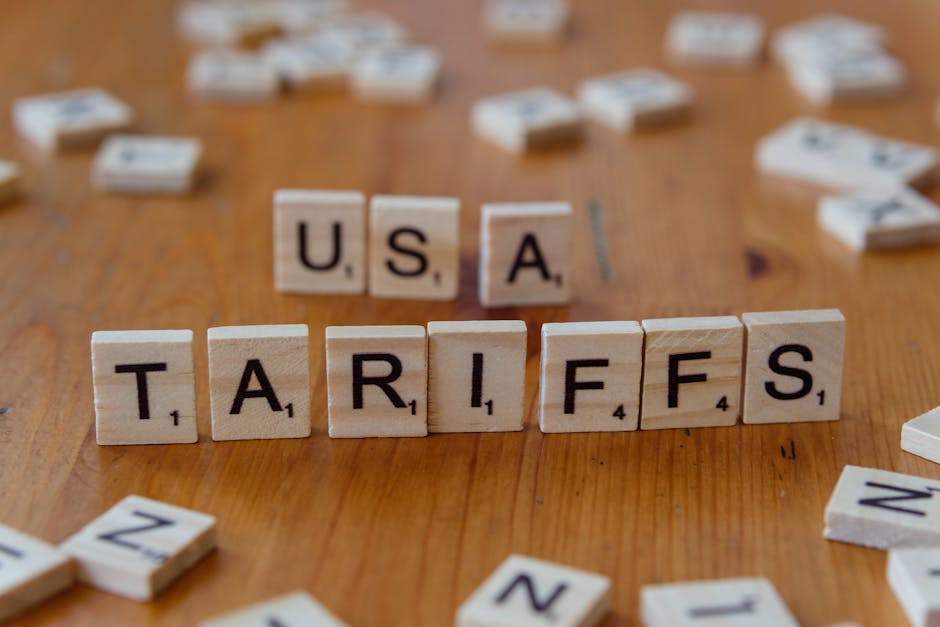
Symbolic image

Seit Februar 2025 verhängte die Trump-Regierung per Präsidentenerlass globale Einfuhrzölle von zehn Prozent, gestützt auf ein Gesetz aus dem Jahr 1974, das ursprünglich nicht für solche Handelsungleichgewichte gedacht war. Am 8. Mai 2026 erklärte das US Court of International Trade diese Zölle mit 2:1 Stimmen für rechtswidrig, wogegen die Regierung sofort Berufung einlegte; Schätzungen zufolge könnte der Staat Importeuren bis zu 175 Milliarden Dollar zurückzahlen müssen. Mit der EU wurde im Juli 2025 im schottischen Turnberry ein Abkommen vereinbart, das die US-Zölle auf die meisten EU-Importe auf 15 Prozent deckelt; die entsprechenden Umsetzungsverordnungen traten am 1. Juli 2026 in Kraft. Gleichzeitig drohte Washington im Mai 2026 damit, die Zölle auf europäische Autos von 15 auf 25 Prozent anzuheben, was Ökonomen zufolge in der EU bis zu 54.000 Arbeitsplätze kosten könnte.

ad-hoc-newsGermany Trade & Invest (gtai)Wirtschaftsticker

Timeline in detail

Sunday, 19 July 2026Geopolitics

Canadian wildfires shroud US cities in smoke, Trump threatens tariffs

Smoke from hundreds of Canadian wildfires settled over a dozen US states; millions of Americans were told to stay indoors. President Trump threatened Canada with higher tariffs to offset the economic cost of the smoke. In Ontario alone almost 200 fires are burning.

Soot from nearly a thousand active fires in Canada drifted into the US and clouded the air on Friday over the Great Lakes, the Northeast and the Mid-Atlantic; authorities warned millions of people of harmful air. Politico and Turkey's Daily Sabah report that President Trump threatened to raise tariffs on Canada to offset the cost of the smoke. The New York Times frames the almost 200 fires in Ontario alone as part of an increasingly frequent run of disasters. Le Monde looks at the long-term destruction of the boreal forests and quotes experts saying that the recurring mega-fires are permanently altering the forest. Across the camps, the smoke is regarded as a cross-border problem; what is disputed is Trump's attempt to turn it into a trade-policy lever against Ottawa.

PoliticoNew York TimesLe MondeDaily Sabah

Saturday, 18 July 2026GeopoliticsTrump threatens Canada with tariffs over wildfire smoke

Trump threatens Canada with tariffs over wildfire smoke

President Trump has threatened Canada with tariffs because smoke from wildfires there is polluting large parts of the US Northeast. He spoke of “willful negligence,” and Republicans even floated sanctions. Canadian Prime Minister Carney said both countries bore equal responsibility in the fight against climate change.

Smoke from Canadian wildfires again drifted across the US Northeast, worsening air quality as far as the New York area, where this Sunday's World Cup final is being held. The conservative Die Welt quotes Trump accusing Canada of “willful negligence” and complaining that the smoke is becoming an annual event. The FT describes how Trump frames the situation as an “invasion” of polluted air and wanted to call Carney, while The Guardian reports that Republicans are threatening sanctions against Canadian government officials. The BBC and Le Monde note that experts see climate change as the cause of the worsening fires, and point out that the Trump administration is at the same time rolling back several climate protection rules. The interpretation of the smoke as a Canadian failure and as a consequence of global warming thus collide head-on.

Die WeltBBC NewsThe GuardianFinancial TimesLe Monde

Forecast · Assessment
  • Most likely55%

    The dispute remains largely rhetorical, at most with limited tariff threats, while the smoke continues to burden the region depending on the weather.

  • Worst case25%

    Trump imposes tariffs, Canada responds, and the dispute strains the already tense trade relationship, USMCA included.

  • Best case20%

    A change in the weather and diplomatic talks quickly defuse both the smoke and the dispute.

Thursday, 16 July 2026EconomyTrump announces new tariffs on Brazil

Trump announces new tariffs on Brazil

The US administration plans to impose 25 percent tariffs on certain imports from Brazil, citing allegedly unfair trade practices. The new levies replace earlier tariffs that the Supreme Court had struck down. Similar investigations are reportedly also underway against Germany.

The Trump administration has announced new tariffs of 25 percent on a range of Brazilian products, accusing Brazil of unfair trade practices. The New York Times frames the move as one in which the new levies replace earlier tariffs that the Supreme Court had previously declared impermissible, meaning Washington is seeking a new legal route. Handelsblatt reports that similar investigations are also underway against Germany and frames the measure as part of a broader protectionist line. The left-liberal NYT emphasizes the legal backstory and the political conflict with Brazil, while the market-liberal German view stresses the danger to European exporters. Brazilian reactions are not yet extensively reflected in the available reports, so the opposing perspective remains thin for now. The push fits into Trump's ongoing trade conflict with numerous partners, whose concrete shape repeatedly depends on courts and negotiations.

New York TimesHandelsblatt

Forecast · Assessment
  • Most likely55%

    The tariffs take effect in a weakened or negotiated form and burden individual sectors without triggering an open trade war.

  • Worst case20%

    Brazil and other countries respond with counter-tariffs, and the trade conflict expands noticeably.

  • Best case25%

    Courts or negotiations defuse the tariffs before they cause major damage.

Wednesday, 8 July 2026EconomyTrump Orders Halt to All Trade With Spain

Trump Orders Halt to All Trade With Spain

US President Trump has ordered a halt to all US trade with Spain. The move hits the markets in an already jittery phase of rising oil prices.

Trump directed the US to cut off all trade with Spain, a drastic and unusual intervention in trade relations with an EU and NATO partner. The move fits into Trump’s confrontational trade-policy course and hits the financial markets at the same time as the oil price jump triggered by his Iran remarks. The concrete justification, legal basis and implementation remained unclear at first. The report rests so far on a single source, which is why its scope and actual implementation should be assessed with caution; whether it is a permanent measure or a negotiating threat remains open.

The Telegraph

Forecast · Assessment
  • Most likely50%

    The order turns out to be negotiating pressure and is softened or partly withdrawn, but for now it causes uncertainty in the markets and in Brussels.

  • Worst case25%

    The trade halt actually takes effect, triggers EU countermeasures and escalates into a broader transatlantic trade conflict.

  • Best case25%

    After a brief escalation comes an agreement that swiftly restores trade and stabilizes relations with Spain and the EU.

Saturday, 4 July 2026EconomyEU-US Tariff Deal With 15 Percent Cap Takes Effect

EU-US Tariff Deal With 15 Percent Cap Takes Effect

Shortly before the 4 July deadline, the EU gave final approval to its trade agreement with the United States. Since 1 July, an all-inclusive US tariff of 15 percent has applied to most EU goods, while in return EU tariffs on US industrial goods are eliminated. Cars fall from 27.5 to 15 percent, while steel remains at 50 percent.

Around 4 July 2026, the trade agreement between the EU and the United States took effect, averting a looming tariff escalation. As of 1 July, an all-inclusive US tariff of 15 percent applied to most goods of EU origin, one that is not added on top of the regular MFN rates: goods with lower MFN rates pay 15 percent in total, while those with higher rates pay only the MFN rate. In return, the EU abolished all tariffs on imports of US industrial goods and improved market access for certain agricultural products. Cars fall from 27.5 to 15 percent, pharmaceuticals and semiconductors are capped at 15 percent, while steel remains at 50 percent. The framework goes back to the July 2025 agreement between Commission President von der Leyen and President Trump and has now been formally confirmed by Parliament and Council. The details rely on official European Commission information as well as analyses by law firms and the Tax Foundation; certain exemptions (for example from September) still require further clarification in their implementation.

Europaeische KommissionSullivan & CromwellThe Daily Pioneer

Forecast · Assessment
  • Most likely55%

    The agreement permanently stabilizes transatlantic trade flows and becomes a blueprint for further deals with other trading partners.

  • Most likely20%

    The agreement permanently stabilizes transatlantic trade flows and becomes a blueprint for further deals with other trading partners.

  • Most likely25%

    The agreement permanently stabilizes transatlantic trade flows and becomes a blueprint for further deals with other trading partners.